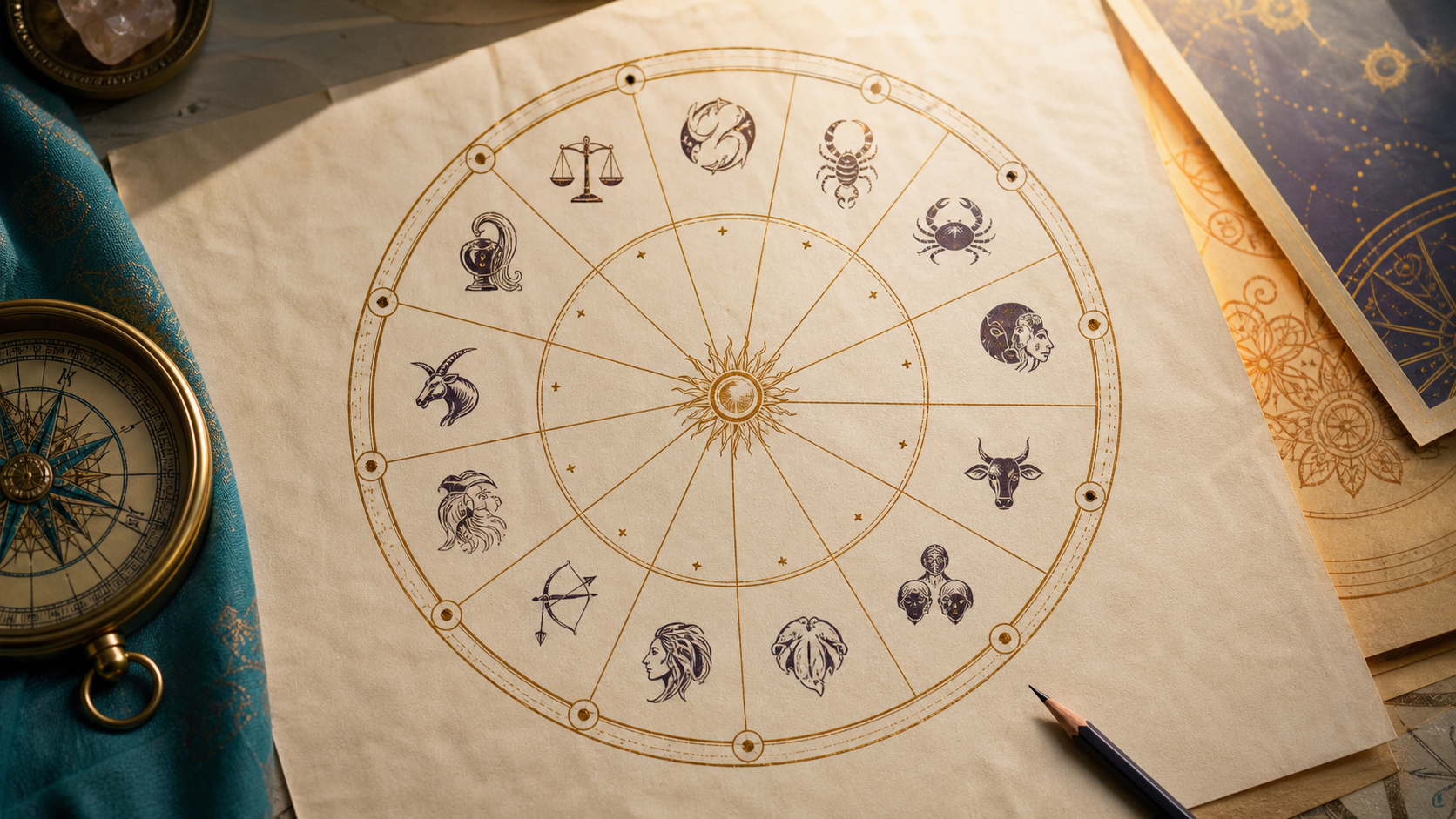
The houses in Vedic astrology are called bhavas. They divide the birth chart into 12 life areas, beginning from the Ascendant or Lagna. If the planets are the actors in the chart, the houses show the stage where their themes become visible in everyday life.
The 1st house describes identity, body, temperament, and the way life is approached. The 2nd house relates to speech, family, food, savings, and values. The 3rd house shows communication, courage, siblings, skills, effort, and self-initiative. Together, these early houses describe personal foundation and everyday behavior.
The 4th house relates to home, mother, emotional security, property, and inner peace. The 5th house shows creativity, intelligence, children, romance, mantra, and past-life merit. The 6th house describes health routines, service, debts, competition, conflict, and the practical work needed to improve life.
The 7th house is the main house of partnership, marriage, clients, agreements, and one-to-one relationships. The 8th house shows transformation, vulnerability, shared resources, hidden matters, and deep psychological change. The 9th house relates to dharma, higher learning, teachers, luck, ethics, pilgrimage, and blessings.
The 10th house, often called Karma Bhava, is central for career, reputation, public life, authority, and contribution. The 11th house shows gains, networks, ambitions, social circles, and long-term desires. The 12th house relates to sleep, retreat, expenses, foreign places, the subconscious, letting go, and spiritual liberation.
House meaning changes depending on the planets placed there, the house ruler, aspects, strength, and current dashas. This is why the same 10th house placement can show leadership for one person and pressure or delay for another. A personalized reading connects the houses into one coherent life map rather than treating each house as a separate definition.
Explore Your Birth Chart Back to Blogs